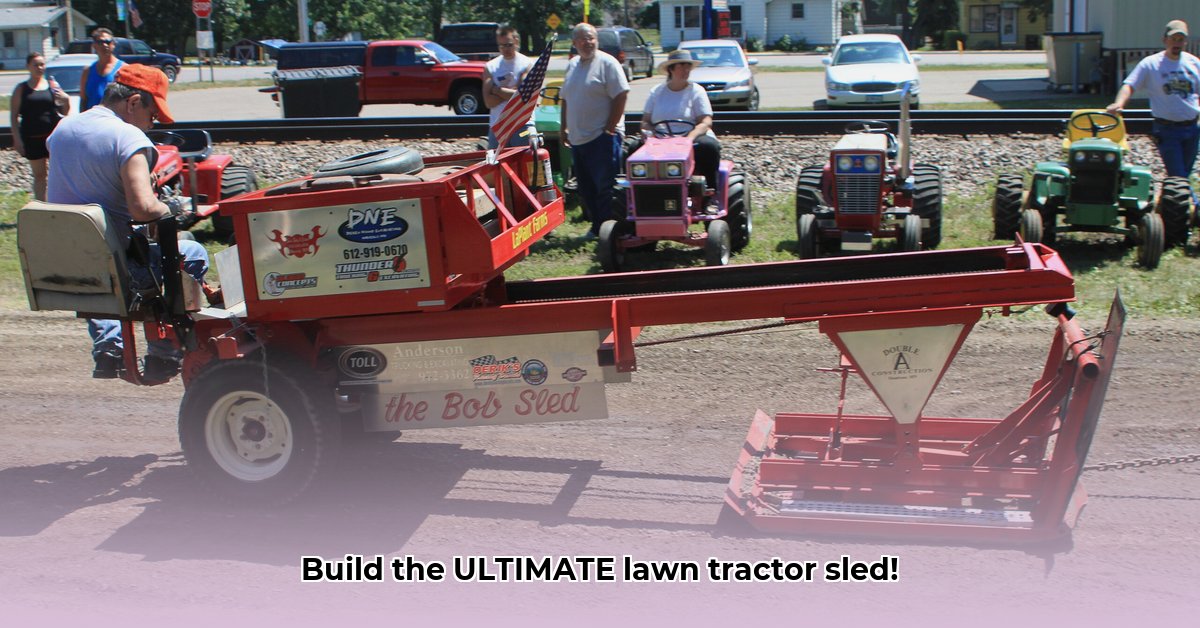
Ready to unleash the hidden power of your lawn tractor? Lawn tractor pulling is a thrilling hobby that combines engineering, skill, and a healthy dose of friendly competition. This comprehensive guide will walk you through building or buying the perfect pulling sled, ensuring a safe and rewarding experience. Whether you're a seasoned competitor or a curious novice, let's get started! For more tractor pulling resources, check out this helpful site: Mini Modified Pulling Tractors.
Choosing Your Pulling Sled: Finding the Right Match
Selecting the right pulling sled is crucial. Your choice depends on your tractor's capabilities (horsepower, towing capacity) and your pulling goals (casual fun or competitive events). A heavier sled provides more resistance, offering a greater challenge, but a stronger tractor is needed to pull it successfully.
Consider these key factors:
- Weight: Heavier sleds offer more resistance, ideal for experienced pullers with powerful tractors. Lighter sleds are better suited for beginners or smaller tractors. What weight class are you aiming for?
- Size: Larger sleds distribute weight more evenly but require greater tractor power. Smaller sleds are more manageable for less powerful machines. What's the optimal size for your tractor’s capacity?
- Materials: Steel is a popular and durable choice. However, reinforced wood or other robust materials can also be considered depending on your budget and building skills. What materials offer the best strength-to-weight ratio?
Remember, starting with a lighter sled and gradually increasing the weight as you gain experience is a sensible approach.
Building Your Own Pulling Sled: A DIY Approach
Building your own sled offers complete customization, allowing you to perfectly match your sled to your tractor's characteristics and your personal style. However, it requires time, the right tools, and some DIY skills.
Step 1: Design and Planning
Before you start, create detailed plans. This includes precise measurements of your sled's dimensions, weight distribution, and, critically, hitch placement. A poorly positioned hitch can severely impact your pull's balance and your tractor's performance. Consult online resources or seek advice from other pullers for valuable insights.
Step 2: Gather Materials and Tools
You'll need heavy-duty materials like heavy-gauge steel, a welder (or access to one), measuring and cutting tools, strong bolts and nuts, and safety equipment (welding gloves, eye protection, sturdy shoes).
Step 3: Construct the Frame
This step requires welding skills. Carefully weld the main frame, ensuring strong and even welds. A weak frame compromises safety and performance. If you lack welding experience, consider enlisting a skilled welder's help.
Step 4: Weight Distribution
Strategic weight placement is paramount. Uneven weight distribution can lead to instability, impacting both your pull and the safety of your tractor. Experiment to find the optimal balance, perhaps using adjustable weights or sandbags.
Step 5: Hitch Installation
The hitch is the crucial connection between your tractor and sled. Use high-quality components and ensure everything is securely fastened. A strong hitch compatible with your tractor's towing capacity is essential.
Step 6: Finishing Touches
After construction, protect your sled from rust with paint or powder coating. This extends the sled's lifespan and enhances its appearance.
Step 7: Testing and Refinement
Before your first pull, test your sled thoroughly in a controlled environment. Make adjustments to improve performance and prevent potential accidents during a competition.
Buying a Pre-built Sled: A Convenient Alternative
Purchasing a pre-built sled saves time and effort. Many manufacturers offer high-quality sleds designed for various tractor types and pulling styles.
When buying, inspect the sled carefully for sturdy construction and quality materials. Compare prices and features from reputable suppliers, understanding that higher prices often reflect superior build quality and durability.
Safety Precautions: Always Prioritize Safety
Lawn tractor pulling can be dangerous. Never exceed your tractor's towing capacity. Always inspect your sled and hitch before each use, and wear appropriate safety gear (gloves, safety glasses, sturdy shoes). A spotter is highly recommended, especially for beginners. Never pull alone.
Finding Suitable Pulling Locations
Check local regulations before pulling on any land, ensuring that you have the necessary permissions. Agricultural fairs and tractor pulls are ideal locations for competitive testing.
Conclusion: Get Pulling!
Lawn tractor pulling offers a unique blend of mechanical skill, strategic thinking, and adrenaline-fueled fun. Remember to prioritize safety and continuous learning. With this guide, you're well-equipped to build or buy the perfect sled and embark on this exciting hobby. Happy pulling!